
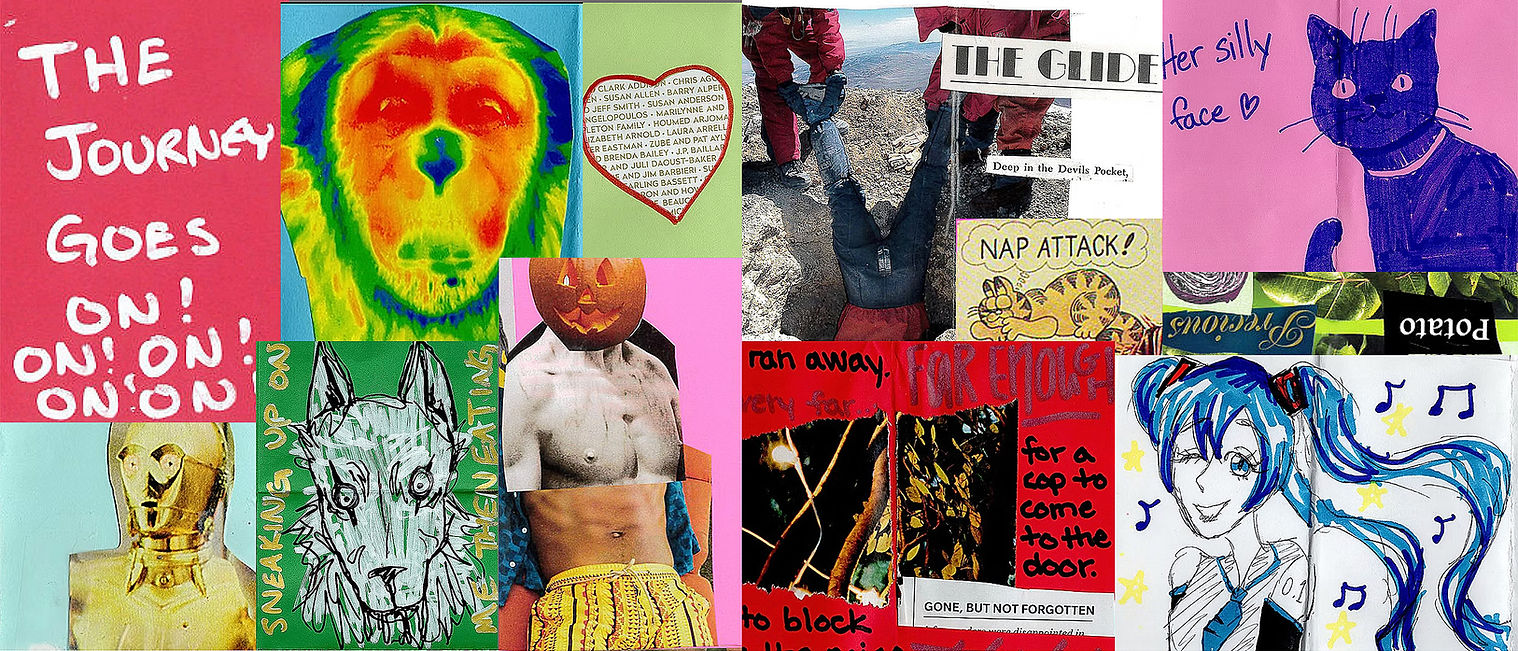
How 2 Zine
where do i start? how do i...
inspiration? examples?
material & requirements...
creative minds <3 to zine
can i zine about my goldfish?
rules(???)
lol*

:3
*


How do I make a zine?
A sheet of paper away!
In case you missed it, a zine is a self-made or collaboratively made, handmade booklet, usually self-published and circulated within smaller communities. Created out of passion, zines have a do-it-yourself approach, often made by hand, and photocopied to share online. They can cover a wide range of topics, from niche interests, art and politics, to personal stories.
There are many approaches to making and crafting a zine. However, if you're new here, you may want to start simple and start with the basics.
Here's a basic list of materials to start your journey:

- A sheet of paper — 11 inches x 8.5 inches (colourful paper, if you want)
- Scissors
- Markers
- Pencils
- Pens
-Paint
- Crayons
-Stencils
-Stickers
- Photos
-Prints
- Glue stick
* a piece of paper, scissors, and something to write or draw with is all you kinda need ...




Here's how to fold it!

What will your zine be about?
Coming up with a topic for anything creative can be overwhelming and troublesome, especially when you've got hundreds of incomplete thoughts and 24 open tabs in your brain that seem never to close. There are many things your zine can be about! It also doesn't have to be about anything in particular! That's the great thing about zines. So, how do you make it a wonderful individual piece that represents your creative thoughts? Well, start by thinking about things that you could go on about, or things that you're passionate about. And, again, these don't have to be profound at all!
To inspire you, I once made a zine about growing up with the early days of the internet! I also... made a zine about my dog's stinky feet. See what I mean? The topic of your zine can be anything you put your mind to. After all, it's a way to express yourself freely!
However, if you were wondering what on earth your zine could be about, you can start with something simple. Take a look at possible topics for a simple start to your zine:


- what i ate for breakfast this morning
- my pet
- my favourite outdoor activity
- my favourite colour, and why?
- reasons i can't sleep
- a recent dream i had
- what my life will look like in 10 years
- what i want to be when i grow up
- monkeys and bananas
- what i carry in my pocket
- a tour of my brain
- a beautiful tree
- the funny faces my cat makes
- my favourite book, and its characters
Possible topics for
a simple zine:
Have fun with it, and don't think too much—especially if it's your first zine.
Steps to designing your zine
What?? There are steps I need to take before making my zine??? Urgh, I know. Here me out, or don't... These are just suggestions, of course, but think about what format and size your zine will be. Will it be small enough to put in your pocket? Or will it be a more substantial size? Are you planning on only folding it with a piece of paper? Or do you want to try stapling it together and add some texture? Will it be bound together somehow? These are all ways you can bind and fold a zine, and it's up to you to figure that out!
Another thing to think about is digitalizing it. Will you be scanning your zine afterwards? Or will you be making it digitally already? What software will you use to make it digitally? Does your printer have a scanner? Or maybe your phone can scan it? Nonetheless, it may be only something to think about if you do go this route. Planning is always a good approach in the ideation phase.
Here are two examples of zines that were folded by hand from the Standard Lettersize (8.5 x 11 inches):
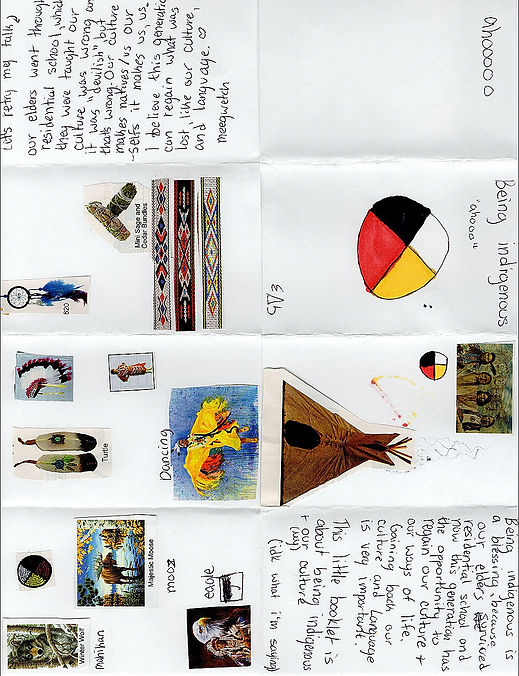
being indigenous zine | by Unknown, (year unknown)
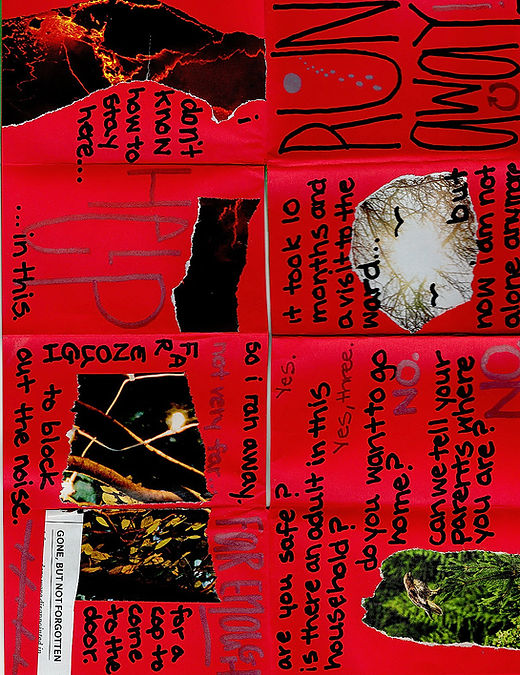
runaway zine | by Benji, (year unknown)
Good design practices
And the art of Gestalt principles
Design has no rules. But if you wanted to go further and plan the visual aspects of your zine, spend some time thinking about a colour palette, line work, cohesive design elements, fonts, graphic design styles, and overall aesthetic you'd like to communicate. These aren't all necessary to create a zine; however, if you're trying to set a tone or create a mood, these might be especially helpful to achieve a certain feel and vibe to your zine.
It is also important to think about the lasting impression you wish to leave with your reader. These questions seem like a lot, but they will definitely guide you in the right creative direction when planning out your zine.
I'd like to share a design practice I've learned in school that I think could help individuals visualize their ideas or inspire them. It's called the Gestalt principles of design.
The Gestalt principles of design are based on a set of psychological rules that express a human's perception, the way we organize, and simplify complex visual information we register daily. These principles explain the science behind a human's capability to recognize patterns and categorize similar sets of elements to understand and process what they are visualizing.
So why is it a principle of design?
Well, research suggests that human's percieve objects and visual images as a whole, instead of each individual part, highlighting compositional anatomy through unity. Therefore, designers can utilize Gestalt principles and organize patterns, visual elements, and emphasize unique features to bring out eye-catching visual complexities in their work.


For the more Experienced
Think you got what it takes?
Think you've got what it takes to take your zines to the next level? Well, listen up. There are many ways you can challenge yourself and create your dream zine. Starting and taking the first few daunting steps is one thing, but mastering the craft and distinguishing your individual style is another. So, how do you distinguish yourself from other creatives? Well, there are plenty of ways you can distinguish yourself from the bunch. Just like many artists, each one has a distinct style that makes them unique. What makes you look at a painting and know it's Van Gogh? What makes you look at a painting and recognize it as Salvador Dali's?
Distiguishing yourself isn't easy at first, but practicing and experimenting with different art styles, colours, patterns, textures, and aesthetics can make you stand out and improve your confidence as a creative.
personalizing your zine
Adding you own personal flair
Many individuals like to tag their work when it is complete. What does that mean? Tagging art is the act of physically marking a piece for identification purposes. Whether it be a signature on the bottom right corner of a painting, stamping a piece with a custom stamp, or applying labels with a name, title, and date for an exhibition.
These are all ways to identify your art and can be used to tag your zine, as well. In the past, when zines used to be distributed unofficially without the guidelines of a publishing company, after printing was complete, the zine-ster would sometimes stamp their print with a custom-made stamp, usually out of an easily carveable material, like wood or rubber. It was a way to tag their zines and let the underground communities know who was distributing the prints.
So if you're interested in making your own stamp, check out Rubber Stamp D.I.Y.









inspire yourself
Inspiring yourself by looking at what others have created can get the ball rolling on your own design. The Internet Archive offers lots of things, from videos, pictures, and zines! Take a look, and broaden your horizon on your knowledge of zines. Click Me
A final message
Starting something new or making something from scratch will always be an overwhelming feeling. But turning it into a learning experience allows you to have fun and try new things. Making a zine is something I encourage everyone to try at least once; making one is a powerful method to express yourself and forces you to push your creative bounds. Creating a zine offers many benefits, such as freedom of expression, a tool for activism and fandom, and acts as an excuse to make something creative, while simultaneously connecting individuals and communities.
In the end, zines are fun, and you should make one.
